The Confederation of African Football (CAF) has officially revealed the venues and schedule for the crucial 2026 FIFA World Cup African qualifiers. This mini-tournament, staged between November 13 and 16, 2025, in Rabat, Morocco, will see four powerhouse teams—Nigeria, Gabon, Cameroon, and the Democratic Republic of Congo—battle for Africa’s final ticket to the prestigious global event. As these national teams prepare, anticipation swells among fans eager for their countries to shine on the international stage. The stakes are enormous: only the eventual champion of this playoff will advance to the intercontinental playoffs, facing other confederations for a chance to secure the continent’s tenth spot at the World Cup, emphasizing the fierce competitiveness emblematic of African football.
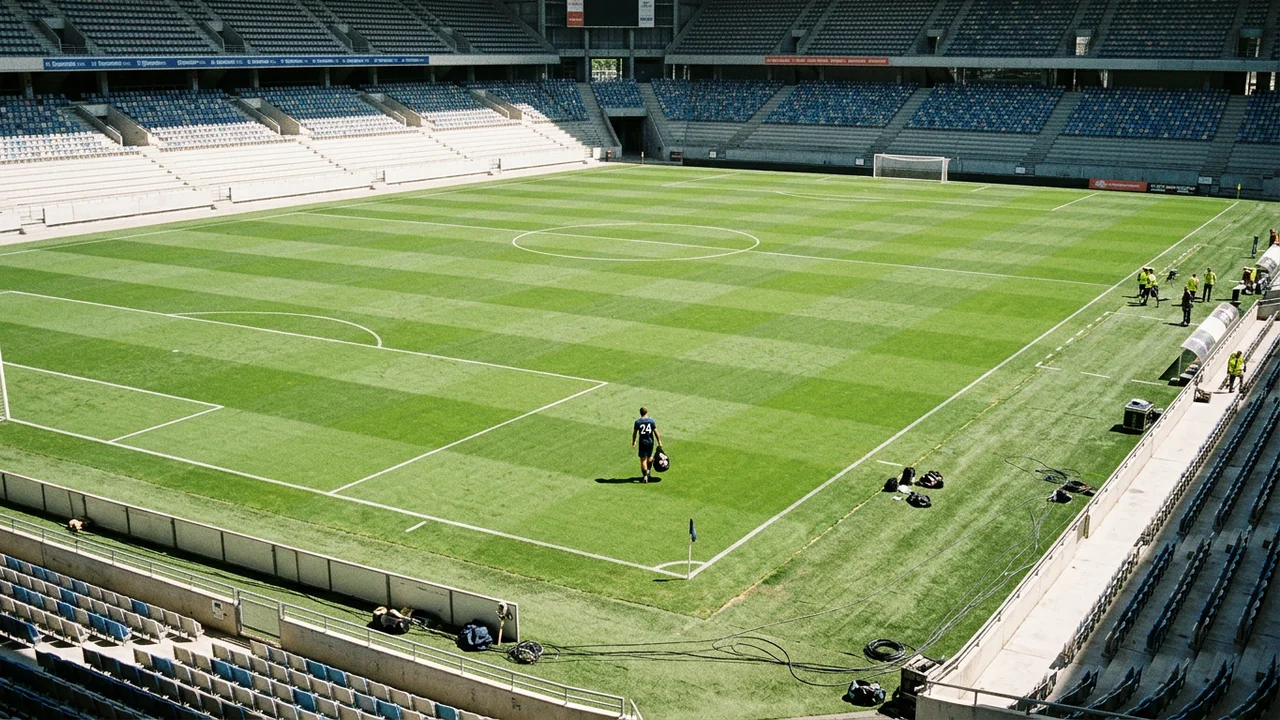
This tournament will unfold across two iconic venues in Rabat: El Barid Stadium and the Prince Moulay El Hassan Sports Complex. On November 13, the semi-finals will ignite passion and national pride, with Nigeria set to clash against Gabon at 5 p.m., followed by a dynamic encounter between Cameroon and the Democratic Republic of Congo at 8 p.m. The hosts Morocco, known for their vibrant football culture, provide an electrifying backdrop that perfectly befits such a momentous event. By November 16, the stage shifts to the Prince Héritier Moulay El Hassan Stadium, where the final will crown the worthy winner who will march forward to the intercontinental playoffs in March 2026.
These qualifiers come at a time when African football is experiencing a renaissance marked by rising stars, legendary veterans, and expanding leagues such as the proposed African Super League 2025. The passion fueling the continent transcends borders, celebrating talent from grassroots barefoot street games to professional leagues where Nike, Adidas, Puma, and Umbro kits adorn the players. Meanwhile, sponsors like Coca-Cola, Visa, TotalEnergies, and Pepsi continue to boost the sport’s development, intertwining global corporate presence with the fervor of African football. This mini-tournament is more than just a set of matches; it represents dreams, pride, and Africa’s determined march towards football glory.
- Event Dates: November 13–16, 2025
- Location: Rabat, Morocco
- Teams: Nigeria, Gabon, Cameroon, Democratic Republic of Congo
- Semi-final Venues: El Barid Stadium, Prince Moulay El Hassan Sports Complex
- Final Venue: Prince Héritier Moulay El Hassan Stadium
- Purpose: Winning team advances to the FIFA Inter-Continental Playoff
| Date | Match | Venue | Kick-off Time (Local) |
|---|---|---|---|
| November 13 | Nigeria vs Gabon | El Barid Stadium (subject to draw) | 17:00 |
| November 13 | Cameroon vs Democratic Republic of Congo | Prince Moulay El Hassan Sports Complex (subject to draw) | 20:00 |
| November 16 | Final – Winner Semi 1 vs Winner Semi 2 | Prince Héritier Moulay El Hassan Stadium | 20:00 |

Strategic Significance of Venue Selection for the 2026 World Cup African Qualifiers
The choice of Rabat as the host city for the 2026 African qualifiers is not just logistical; it’s a deliberate expression of Morocco’s growing stature within African football. Hosting matches at prominent stadiums such as El Barid and the Prince Moulay El Hassan Sports Complex offers players and supporters top-tier facilities that can elevate the quality and excitement of the competition.
Morocco has consistently been at the forefront of football infrastructure development in Africa. The El Barid Stadium, with its modern amenities, ensures an optimal atmosphere for the semi-finals, maximizing fan engagement and broadcast quality. Meanwhile, the Prince Moulay El Hassan Sports Complex, named after the crown prince, holds historical importance and serves as a symbol of national pride. This arena’s atmosphere fuels the competitive fire, giving players an unforgettable stage to showcase their abilities.
Furthermore, situating the final at the Prince Héritier Moulay El Hassan Stadium blends prestige with functionality. This stadium’s capacity and facilities meet FIFA standards, providing an ideal venue for what promises to be a tense and thrilling final showdown. From an organizational standpoint, this consolidation of venues in Rabat simplifies operations while amplifying the fan experience, with easy access to hotels, transport, and cultural landmarks.
- Benefits of stadium choice: Enhanced player performance due to excellent pitch conditions and facilities.
- Audience experience: Comfortable seating, accessibility, and vibrant crowd ambiance.
- Media and broadcasting: Facilities enabling high-definition and wide international coverage.
- Symbolism: Stadiums tie into Moroccan heritage and ambition in African football.
| Venue | Capacity | Main Features | Significance |
|---|---|---|---|
| El Barid Stadium | 20,000+ | Modern turf, advanced lighting, media facilities | Semifinal matches, symbol of modern Moroccan sports |
| Prince Moulay El Hassan Sports Complex | 18,000 | Historical significance, training grounds | Semifinal matches, inspired by royal patronage |
| Prince Héritier Moulay El Hassan Stadium | 45,000 | Largest venue, fully FIFA compliant | Final match stage, Morocco’s flagship stadium |
As the tournament draws near, the rivalry between Nigeria and Gabon, as well as Cameroon and DRC, will inevitably be amplified by this choice of venues. The comfort and prestige of the stadiums in Rabat encourages players to elevate their game, while fans experience the beauty of African football at its finest. Supporting African football’s integration with iconic brands such as Nike, Adidas, Puma, and Umbro is visible across apparel and kit sponsorships, adding to the spectacle and professionalism on display.
Analyzing the Four Teams: Tactical Styles, Strengths, and Prospects in the 2026 Playoffs
Each team competing in this intense mini-tournament brings its own distinct style, history, and aspirations. The battle to secure Africa’s final spot is as much a clash of tactics and training philosophies as it is one of star players and national pride. Let’s delve into what fans can expect from Nigeria, Gabon, Cameroon, and the Democratic Republic of Congo (DRC) during this decisive phase.
Nigeria – The Super Eagles’ Quest for Glory
Nigeria arrives as a football giant with a rich World Cup history and a squad brimming with both seasoned veterans and dynamic youngsters. Led by the prolific striker Victor Osimhen, who recently returned to the national side after impressive club performances, the Super Eagles exemplify pace, physical strength, and tactical adaptability. Their attacking line boasts quality that pushes defenses to their limits, reinforced by midfielders disciplined in ball retention and quick transitions.
Under intense pressure to return to the World Cup stage, Nigeria’s tactical setup revolves around versatile 4-3-3 formations fostering wide play and quick interchanges. Their recent form, indicated by solid showings in friendlies and qualifiers, reflects deliberate progression toward sharpening defensive organization and clinical finishing. Key pros also include their experience from leagues backed by sponsors like Castrol and Samsung, who support training and performance tech integration.
Gabon – The Dark Horses with Talent to Upset
Gabon presents a blend of flair and resilience, powered by emerging stars eager to make their mark. The Gabonese squad features players with remarkable skill sets, often honed abroad, combining technical finesse with physical robustness. This team opts for a balanced 4-2-3-1 formation that focuses on midfield control, fluid build-ups, and lethal counterattacks.
While not always favored in such high-stakes tournaments, Gabon’s unpredictability and hunger should not be underestimated. Their preparation includes tactical sessions focusing on pressing triggers useful in disrupting opponents’ rhythm. Furthermore, brands like Puma and Umbro are prominently involved in outfitting the team with kits that emphasize lightweight agility, aiding their rapid gameplay.
Cameroon – The Indomitable Lions Roar Stronger
Cameroon’s football pedigree needs no introduction. This team combines physical power, tactical discipline, and an enduring supply of talent across generations. The Indomitable Lions use a high-intensity pressing game coupled with solid defensive foundations, typically fielding a 4-4-2 or 4-3-3 system depending on the opponent and match situation.
Their training is fine-tuned to maximize set piece effectiveness and corner conversion, elements that often decide tight affairs. As revealed in recent analyses of qualifiers, their corner conversion rate stands as one of the highest among African teams. Backed by sponsorship from TotalEnergies, the campaign and player’s stamina and energy management are finely managed.
Democratic Republic of Congo (DRC) – The Resurgent Challengers
The DR Congo national team embodies resilience and a growing football infrastructure that nurtures young talent aggressively moving through both local leagues and international transfers. Their approach tends to emphasize flexible tactics, frequently adapting between a defensive 5-3-2 to a more adventurous 3-5-2 formation depending on match context.
DRC’s players combine technical skill with physicality, making them tough opponents in midfield battles and transitions. Recent player transfers impacting squad depth and quality, as documented in African player transfers impact, reinforce the team’s competitiveness heading into these playoffs.
- Key Tactical Approaches:
- Nigeria: Versatile 4-3-3 with pace and physicality
- Gabon: Balanced 4-2-3-1 focusing on midfield control
- Cameroon: High-intensity pressing and set-piece specialties
- DRC: Tactical flexibility between 5-3-2 and 3-5-2 formations
| Team | Formation | Strengths | Notable Players |
|---|---|---|---|
| Nigeria | 4-3-3 | Speed, attack versatility, strong defense | Victor Osimhen, Joe Aribo |
| Gabon | 4-2-3-1 | Midfield control, counter-attacks | Pierre-Emerick Aubameyang |
| Cameroon | 4-4-2 / 4-3-3 | Pressing, corner conversion | Eric Maxim Choupo-Moting, André Onana |
| DR Congo | 5-3-2 / 3-5-2 | Tactical flexibility, physicality | Moses Simon, Dieumerci Mbokani |
Following the journey of these teams also means tracking emerging talents shaping Africa’s future. For fresh perspectives on rising stars and team dynamics, readers may find further inspiration in sections covering rising stars around AFCON 2025, ensuring comprehensive updates on the continent’s football evolution.

How the 2026 African World Cup Playoff Fits into the Global Football Ecosystem
The 2026 African qualifiers playoff has significance that extends beyond the continent. With the 2026 FIFA World Cup jointly hosted by the United States, Canada, and Mexico, the tournament structure expands, including more spots for African nations. This amplifies the global focus on African football and the quality of its competitors. The mini-tournament in Morocco serves as a microcosm of global football politics, finance, sponsorship, and cultural exchange.
International brands play indispensable roles in shaping the environment for these events. Nike, Adidas, Puma, and Umbro supply gear that not only enhances players’ performance but also embeds African football deeper into international markets. Meanwhile, sponsors like Coca-Cola and Pepsi help to fuel public enthusiasm and fund developmental projects.
Moreover, partners such as Visa and TotalEnergies facilitate smooth operational capacity and energy management both on- and off-field. Technology incorporation, such as performance tracking and broadcast innovation backed by Samsung, ensures fans across the world witness matches in extraordinary clarity and detail.
- Global Sponsorship Impact: Investment enriches infrastructure and competitive standards
- Expanded World Cup Format: Increases African representation and heightens stakes
- Cultural Exchange: Cross-continental fan engagement and shared football narratives
- Media Reach: Worldwide broadcasting elevates African football’s visibility and market
| Stakeholders | Role | Impact on African World Cup Playoffs |
|---|---|---|
| Nike, Adidas, Puma, Umbro | Kit and equipment providers | Professionalism, player performance, brand exposure |
| Coca-Cola, Pepsi | Main sponsors | Fan engagement, event funding |
| Visa, TotalEnergies | Operational and energy partners | Logistics, tournament sustainability |
| Samsung | Technology partner | Broadcast innovation, performance tracking |
The global football ecosystem’s embrace of African qualifiers underscores the continent’s rising power. As the winner advances to the intercontinental playoff, their battle symbolizes not just a contest of nations but a fight for respect, investment, and recognition on the world football stage.
Preparing for November: What Fans and Teams Must Know Before the 2026 African Qualifiers
With the kickoff in Rabat less than a month away, preparation extends beyond teams to include fans, broadcasters, and officials. Understanding schedules, venues, and the stakes involved helps heighten the collective pulse driving this event. Professional clubs rely on clear calendars to manage player availability, especially considering transfer windows and tournament overlaps documented in sources like African club CAF calendar.
Fans worldwide gear up to witness thrilling matches, with broadcast times tailored to maximize viewership across Africa and diaspora communities. Media outlets, including platforms focusing on injury reports and player fitness like injury reports on African leagues, provide vital updates shaping expectations.
Mimicking global tournaments, the event calls for protocols and stadium security adhering to international standards, ensuring a safe and vibrant atmosphere. Ticket sales, merchandising featuring brands such as Adidas and Puma, and fan zones foster community spirit and enthusiasm. Moreover, the presence of seasoned veterans and exciting newcomers alike, captured in narratives on AFCON veterans and newcomers, inspires fans young and old.
- Essential notes for fans: Arrival times, venue etiquette, ticket procurement
- Team logistics: Acclimatization, training schedules, tactical rehearsals
- Broadcast info: Viewing platforms, schedules
- Community engagement: Fan zones, merchandise purchases, local culture events
| Category | Details |
|---|---|
| Ticketing | Available online and at venues; priority for local supporters |
| Match Dates | November 13 (semifinals), November 16 (final) |
| Broadcast | Multiple African networks and international streaming platforms |
| Fan Zones | Rabat city center and event venues |
| Covid Protocols | Updated safety measures in place |
The crescendo to the World Cup qualifiers pulses through nerves and passion. The fans, teams, and governing bodies share one aim: to elevate African football’s stature and seize the opportunity to cement a lasting legacy on the world stage.